 Chef Matt Cooks
How to Emulsify a Vinaigrette That Coats the Salad
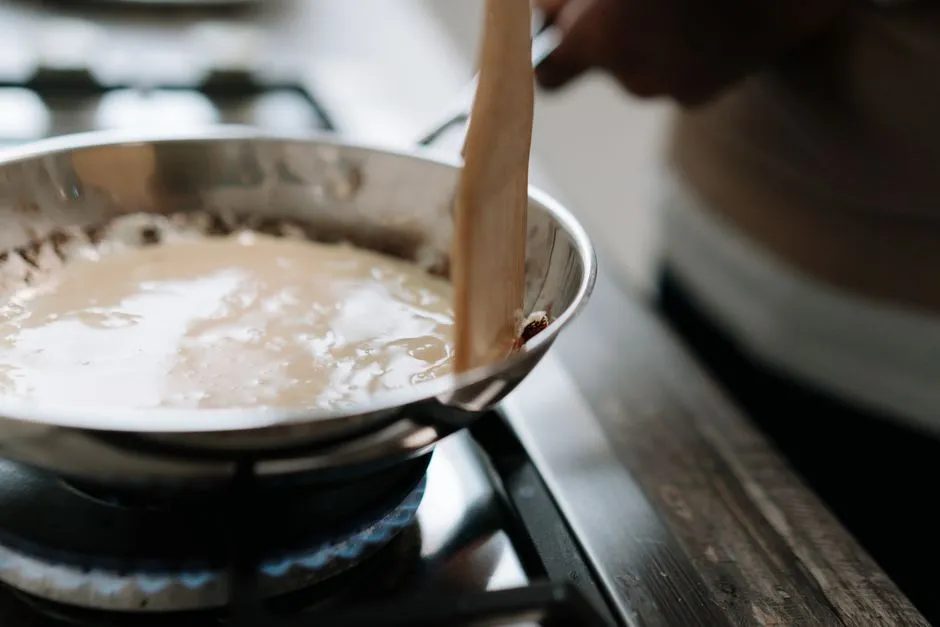
- How do you emulsify a vinaigrette?
- Use one complete formula
- Prepare the bowl and ingredients
- Build the water-based phase first
- Add the oil slowly while whisking
- A jar method makes a temporary emulsion
- Adjust flavour without losing the method
- Understand separation versus failure
- Refrigerate, then recombine for service
- The repeatable sequence
- Sources
How do you emulsify a vinaigrette?
Begin with the acid, seasoning and any recipe-specified emulsifier in a bowl. Whisk them until even. Then add the oil in a thin, steady stream while whisking continuously. Keep the bowl stable, keep the oil moving slowly, and stop when the dressing looks homogeneous and coats a leaf lightly.
This makes an emulsion: droplets of oil are dispersed through the water-based phase instead of sitting in a separate layer. It does not guarantee that the dressing will stay combined forever. The Culinary Institute of America describes vinaigrette as a temporary emulsion and directs cooks to whisk it again before use. The Institute of Culinary Education calls its mustard-based balsamic version semi-permanent because it still separates over time.
Separation is therefore often normal. The useful question is whether the dressing combines cleanly for service and tastes balanced, not whether it remains motionless in the jar for days.
Use one complete formula
This article follows the Institute of Culinary Education’s published balsamic vinaigrette formula:
- 1 shallot, minced
- 1/3 cup balsamic vinegar
- 1 tablespoon Dijon mustard
- 1 tablespoon honey or maple syrup
- 1 cup olive oil
- salt and pepper, to taste
That is one part acid to three parts oil by volume, before the smaller flavouring ingredients. The Culinary Institute of America also presents three parts oil to one part acid as a standard starting point, then tells cooks to taste whenever the oil, acid or flavourings change.
Do not treat 3:1 as a law. Vinegars vary in tartness and oils vary in flavour. More importantly, do not borrow the oil from one formula and the acid from another while keeping the rest unchanged. Make one recipe, taste it, and adjust that batch deliberately.
Dijon mustard helps this formula stay dispersed longer. Honey or maple syrup changes flavour and body as well as sweetness. If you omit or replace either ingredient, you are changing the published formula and should expect a different texture.
Prepare the bowl and ingredients
Use a medium bowl with enough open space for a whisk to move without throwing dressing over the rim. Set it on a folded damp towel or nonslip mat so one hand does not have to chase it around the counter. A balloon whisk works well; a fork can combine a small batch but usually gives less agitation.
Measure every ingredient before starting. Mince the shallot evenly so large pieces do not interrupt the whisk or collect at the bottom. Use clean, dry measuring tools and a clean bowl.
Read the labels when cooking for someone with an allergy. Dijon mustard contains mustard, and prepared condiments can contain other ingredients that vary by product and jurisdiction. This formula is not allergy-safe merely because it contains no egg or dairy. Ask the diner, read every package, and prevent cross-contact with utensils or surfaces that handled their allergen.
Build the water-based phase first
Put the minced shallot, balsamic vinegar, Dijon and honey or maple syrup in the bowl. Whisk until the mustard and sweetener are evenly distributed and no dense streaks remain. Add the recipe’s initial salt and pepper conservatively; the final seasoning comes after the oil is incorporated.
This order matters. The mustard must be dispersed through the vinegar-based phase before it is asked to help distribute a cup of oil. If oil goes into an empty bowl first, adding the other ingredients later makes even droplet formation harder.
Keep a tasting spoon separate from the whisk. Never taste with a utensil and return it to a batch being served to other people.
Add the oil slowly while whisking
Start whisking the vinegar mixture, then pour the olive oil in a thin stream. The Institute of Culinary Education specifically directs a slow oil stream with constant whisking. The movement breaks the oil into smaller droplets while the mustard-containing phase surrounds them.
For the first part of the oil, go especially slowly. Once the mixture looks even and slightly thicker, continue with a steady narrow stream. Move the whisk through the whole bowl rather than stirring only the centre. Pause the pour if the oil begins pooling faster than the whisk can incorporate it.
The finished vinaigrette should look uniform immediately after whisking, with no broad slick of oil on top. It should fall from a spoon as one dressing rather than as separate oil and vinegar. Dip one clean leaf into it: the dressing should cling in a light film without making the leaf greasy.
Do not use speed to compensate for an unstable bowl. Stop pouring, secure the bowl, then resume.
A jar method makes a temporary emulsion
For a simple temporary vinaigrette, a clean jar with a sound, tight-fitting lid can replace the whisk. Illinois Extension publishes jar methods that combine measured dressing ingredients and shake them until mixed.
Add the ingredients, leave enough empty space for them to move, fasten the lid fully, and hold both lid and base while shaking. Set the jar on the counter before opening it. If the lid is damaged, does not seal, or the container is not suitable for acidic food, use a bowl instead.
A jar is not a different formula. Use the same measured ingredient list and the same taste check. It also does not make the emulsion permanent; shake again just before serving when layers reappear.
Adjust flavour without losing the method
Taste only after the measured oil is incorporated. Make one small adjustment at a time and whisk fully before deciding again.
Too sharp: add a small amount of the formula’s oil, whisk, then retaste. Check salt before adding more sweetener; under-seasoning can make acidity seem harsher.
Too oily or flat: add a small amount of the same vinegar, whisk, then retaste. Do not pour directly from a large bottle over the bowl.
Too sweet: use a small amount of the same vinegar rather than adding a second, unrelated acid.
Too salty: make an unseasoned portion of the same oil-and-acid formula and combine the batches. More mustard may add more salt, depending on its label.
These are editorial rescue steps, not changes to the source recipe. Record the additions if you want to reproduce the result. If the dressing needs repeated large corrections, start again with measured ingredients; chasing it back and forth wastes more oil than a clean reset.
Understand separation versus failure
A clean vinaigrette that separates after standing has behaved as a temporary or semi-permanent emulsion. Whisk it or shake a sealed jar again immediately before serving.
A dressing that never becomes homogeneous may have received the oil too quickly, lacked enough agitation, or lost the recipe’s mustard through an omission. Stop pouring. Whisk the remaining oil only after the bowl looks even again. If a wide oil layer remains, begin with a small amount of the original vinegar-and-mustard phase in a clean bowl and slowly whisk the separated dressing into it. Treat that as an editorial salvage, and stop if the texture does not improve.
Do not confuse this cold dressing with a hot butter sauce. Heat, proteins and the physical state of butter change the repair. Our pan-sauce method explains why butter is mounted off direct heat; its temperature rules do not belong in a vinaigrette bowl.
Refrigerate, then recombine for service
Transfer the vinaigrette to a clean, closed food-safe container and refrigerate it until needed, as both the Culinary Institute of America and Illinois Extension direct for their published dressings. Label the container with what it is and when it was made.
This article does not assign one shelf life to every homemade vinaigrette. Fresh shallot, garlic, herbs, dairy or egg can change the storage boundary, and a tested recipe’s instruction controls. Do not store this fresh-shallot formula at room temperature or treat vinegar as proof that a homemade mixture is shelf-stable.
Olive oil may become cloudy or firm in the refrigerator. Keep the container closed, let the portion needed for service loosen briefly under safe room conditions, then whisk or shake it. Never taste a dressing to decide whether it is safe. Discard it when its storage history is uncertain or when the recipe’s limit has passed.
The repeatable sequence
For this balsamic formula:
- Measure the shallot, vinegar, Dijon, honey or maple syrup, oil, salt and pepper.
- Secure a clean bowl.
- Whisk the shallot, vinegar, mustard and sweetener until even.
- Add the oil in a thin stream while whisking continuously.
- Pause the pour if oil pools; restore an even mixture before continuing.
- Check for a homogeneous appearance and a light coating on a clean leaf.
- Taste and make one measured adjustment at a time.
- Serve promptly or refrigerate in a labelled, closed container.
- Whisk or shake again before serving if the dressing separates.
That is the whole technique: establish the water-based phase, divide the oil into it slowly, and accept that a well-made vinaigrette may still need one last whisk at the table.
Sources
- Institute of Culinary Education — Sauce-Making 101: Emulsified Sauces and Balsamic Vinaigrette
- Culinary Institute of America — 10 Recipes Every Cook Should Know: Vinaigrette
- Illinois Extension — 4-H Cooking 301, Salad Dressings
- Illinois Extension — Eat More Salads
- FDA — Food Safety at Home
Frequently asked questions
What is the usual oil-to-vinegar ratio for vinaigrette?
The Culinary Institute of America and Institute of Culinary Education use three parts oil to one part acid as a standard starting point. It is not universal: oils and vinegars differ in flavour and tartness. Follow one complete recipe, then taste after emulsifying and adjust that batch in small measured steps.
Why does my vinaigrette keep separating?
Ordinary vinaigrette is a temporary or semi-permanent emulsion, so later separation can be normal. Whisk it again or shake it in a sound, tightly closed jar just before serving. If it never combines at all, the oil may have been added faster than the agitation could disperse it, or a recipe-specified emulsifier may be missing.
Does Dijon mustard keep vinaigrette emulsified?
Dijon mustard helps oil droplets remain dispersed longer in mustard-based vinaigrettes, but it does not make every dressing permanently stable. Whisk the mustard into the vinegar phase before slowly adding oil. Read the condiment label when serving someone with an allergy, and do not assume an egg-free or dairy-free formula is automatically safe for every diner.